
What Is Home Care? A Simple Guide to Care at Home
Home care allows people to receive the support they need while continuing to live in the comfort and familiarity of…

Dementia can affect many parts of everyday life, including how a person sees and understands the world around them. Changes in vision can sometimes make it harder to recognise objects, find their way around a room or tell the difference between different areas.
One simple thing that can help is colour.
Using colour carefully at home or in a care setting can make things easier to see, help with navigation and create a more comfortable environment. It doesn’t have to mean making everything bright and colourful. Small, thoughtful changes can make a real difference.
As dementia progresses, some people can find it harder to process visual information. Colours may not appear as clear as they once did, and similar shades can be difficult to tell apart.
Using clear colour contrasts can help important objects stand out from their surroundings.
For example, a dark-coloured toilet seat against a light-coloured bathroom can be easier to see than one that blends into the background. Similarly, a brightly coloured handrail can be easier to spot against a plain wall.
The aim is to make everyday surroundings easier to understand without making them overwhelming.
Finding your way around the home can become more difficult for someone living with dementia. Colour can be used as a simple visual reminder to help with this.
Some ideas include:
You don’t need to change everything at once. Start with the areas where someone is finding things particularly difficult.
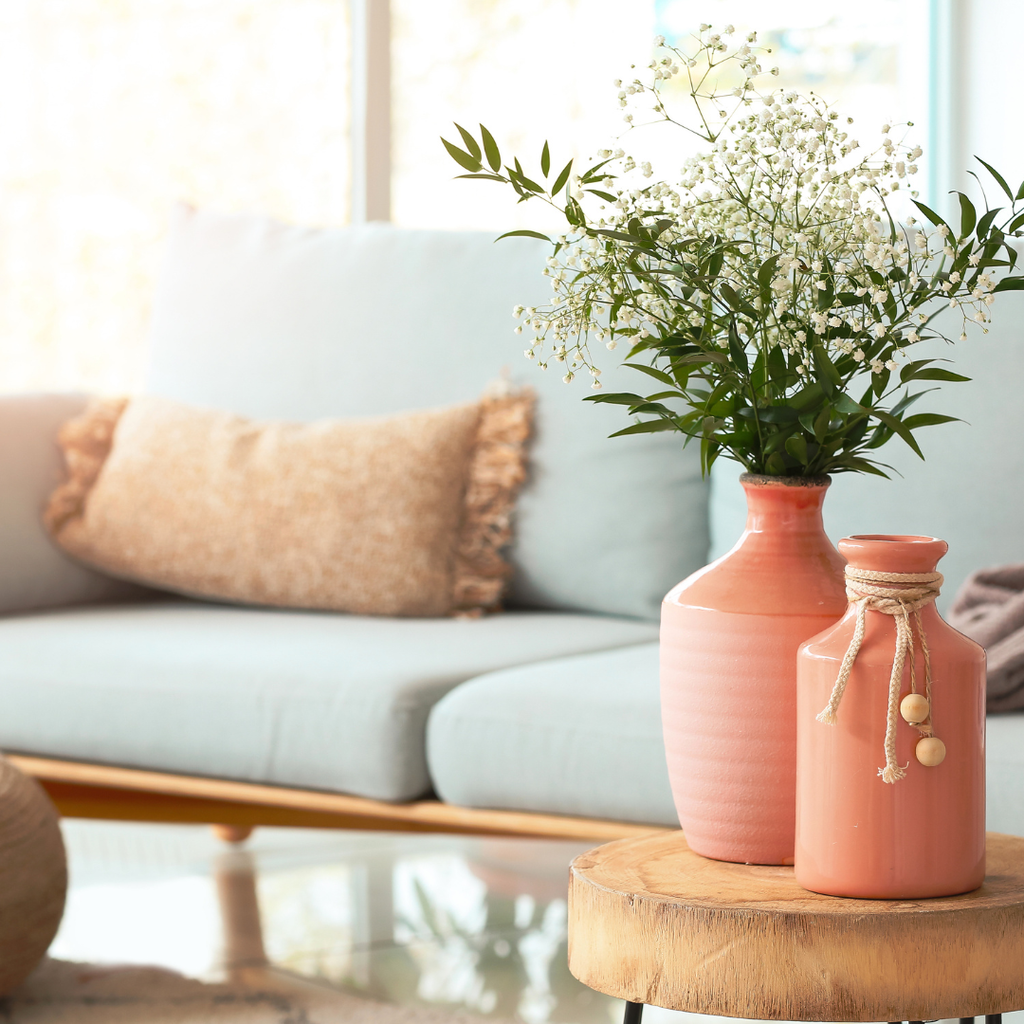
Colour can also affect how a room feels.
For someone living with dementia, a calm and familiar environment can be comforting. Softer, more muted colours can help create a peaceful atmosphere, while very bright or busy patterns may sometimes be distracting or confusing.
Natural colours, gentle blues, greens and warm neutral shades can work well in bedrooms and living areas.
That said, there is no single colour that works for everyone. Personal preference matters. A favourite colour, familiar decoration or something that reminds a person of home can be much more meaningful than following a particular colour scheme.
Colour can also be useful during everyday activities.
For example, using a plate that contrasts with the food can make the meal easier to see. A brightly coloured cup can also be easier to identify against a table or worktop.
Colour can be introduced into activities too. Painting, drawing, arranging flowers, gardening and crafts can all provide opportunities to use colour in an enjoyable and meaningful way.
These activities are not just about keeping someone occupied. They can provide opportunities for creativity, conversation and connection.
One of the most important things to remember is that a person’s home should still feel like their home.
Making changes to improve safety doesn’t mean removing all personality from the space. Family photographs, favourite ornaments, familiar furniture and personal belongings can all help create a sense of familiarity.
If you are making changes to the home, involve the person as much as possible. Let them choose colours and decorations where they can. This can help them feel involved and maintain a sense of independence.
If you are supporting someone living with dementia, here are a few simple things you could try:
✔ Use contrast
Choose colours that clearly stand out from each other, particularly for important items such as doors, handrails and bathroom fittings.
✔ Avoid confusing patterns
Busy patterns on carpets, curtains or furniture can sometimes be difficult to interpret. Simpler designs may be easier to manage.
✔ Think about lighting
Good lighting is just as important as colour. Make sure rooms are well lit and try to reduce shadows and glare where possible.
✔ Keep things familiar
Avoid making lots of changes at once. Familiar surroundings can provide comfort and reassurance.
✔ Think about the individual
Everyone experiences dementia differently. What works well for one person may not work for another, so pay attention to their preferences and reactions.

Colour might seem like a small detail, but thoughtful use of colour can help make everyday surroundings easier to understand and navigate.
The most important thing is not to create a perfect colour scheme. It is to create an environment that feels safe, familiar, comfortable and personal.
From choosing a contrasting bathroom door to adding a favourite coloured cushion, small changes can help make everyday life a little easier for someone living with dementia.
At Fuchsia Homecare, we understand that the environment around a person can be just as important as the care they receive. Simple changes, familiar routines and a little thought can all help someone feel more comfortable and confident at home.
Want to see more from Fuchsia Homecare?
Follow us on social media for tips, updates and a closer look at what we do.
Check out our other guides: Blog & Advice – Fuchsia Home Care




2 Wharfedale Road, Ipswich, Suffolk, IP1 4JP
Tel: 01473 233797
On Call: 07340939102
Email: [email protected]
Opening Times
Monday – Friday – 8:30 – 17:00
Monday to Friday – 17:00 – 8:30 -Urgent, non-life-threatening concerns only
Saturday – Sunday -Urgent, non-life-threatening concerns only
13-17 Margett St, Cottenham, Cambridge, CB24 8QY
Tel: 01954 252486
On Call: 07366395930
Email: [email protected]
Opening Times
Monday – Friday – 8:30 – 17:00
Monday to Friday – 17:00 – 8:30 -Emergency Only Contact
Saturday – Sunday -Emergency Only Contact
Gainsborough Business Centre, 6 Challenge Way, Colchester, Essex, CO1 2LY
Tel: 01206 822491
On Call: 07585544871
Email: [email protected]
Opening Times
Monday – Friday – 8:30 – 17:00
Monday to Friday – 17:00 – 8:30 -Emergency Only Contact
Saturday – Sunday -Emergency Only Contact
Yarmouth Business Park, Suffolk Rd, Great Yarmouth, NR31 0LN
Tel: 01493738488
On Call: 07443145811
Email: [email protected]
Opening Times
Monday – Friday – 8:30 – 17:00
Monday to Friday – 17:00 – 8:30 -Emergency Only Contact
Saturday – Sunday -Emergency Only Contact
Unit 5, Beech Avenue Business Park, Taverham, Norfolk, NR8 6HW
Tel: 01603 542949
On Call: 07459826426
Email: [email protected]
Opening Times
Monday – Friday – 8:30 – 17:00
Monday to Friday – 17:00 – 8:30 -Emergency Only Contact
Saturday – Sunday -Emergency Only Contact